System / 001Autonomous underwater platform
Nautilus-XAutonomousUnderwaterIntelligence
Engineered to work where sending a person is the wrong answer — and to keep working when nobody is listening.
- Class
- Modular AUV
- Control
- Fully autonomous
- Status
- Built & tested
Phase transitionSurface → deep water
Designed forautonomousexploration
- Depth control
- Autonomous
- Navigation
- Real-time
- Communication
- Long-range
Closed-loop ballast and thrust
Fused inertial and pressure state
Surfaced LoRa telemetry
Mission profileSix phases · unattended
One dive, start to finish
01MovingSurface transit to the mission areaSurface run · heading hold · full ahead
- 01Moving
- 02Descent
- 03Activity
- 04Return
- 05Monitoring
- 06Charge
Dive profileReal-time 3D
Watch it go down.
Surface transit, then it floods ballast and sinks flat to twenty-five meters, works the bottom, and blows the tanks to come back up. Depth is a ballast problem here, not a flying one — which is why it never noses over.
- Phase
- 01 Moving
- Depth
- 0.0 m
- Ballast
- Trimmed
Surface run · heading hold · full ahead
ArchitectureEight subsystems
Engineered from the inside out
- Optical viewportBronze-sealed forward port carrying the vision payload
- Ballast tanksPaired variable-buoyancy cylinders trimming depth and attitude
- On-board systemsDry pressure vessel housing the compute stack and sensor bus
- BatteriesTwo sealed pods, mounted low to sit the mass under the buoyancy
- PropulsionCounter-rotating ducted thrusters on the longitudinal axis
- Filtration payloadAft intake face where the collection module mounts
- Modular frameFour corner rails carrying every subsystem as a swappable block
- Sensor plateIMU and pressure transducer on the instrument shelf
Software architectureOn-board · no permanent link
Autonomyliveson-board.
Nothing in the control path waits on a radio. Sensing, estimation, decision and actuation all close inside the pressure hull; the link is a report, not a leash.
Closed loopDepth · heading
Holding a number, not a direction
Two independent loops run continuously. Each compares where the vehicle is with where the mission says it should be, and spends thrust on the difference.
Depth loop
- Target
- 12.00 m
- Current
- 11.94 m
- Error
- +0.06
PID correction6.2 % thrust
Heading loop
- Target
- 090°
- Current
- 089.4°
- Error
- −0.1
Differential thrust3.4 % split
Illustrative values — the loop structure is the point, not the specific readings.
Link budgetSurfaced telemetry
Connectedwhen needed.Autonomouswhen not.
Submerged
- SensorsIMU · pressure · payload
- On-board computerFusion and estimation
- Local decisionMission state advances alone
Radio is useless down here. Nothing waits for it.
Surfaced
Surface link established · LoRa telemetry
- Depth
- 0.4 m
- Heading
- 084°
- Battery
- 78 %
- Status
- Nominal
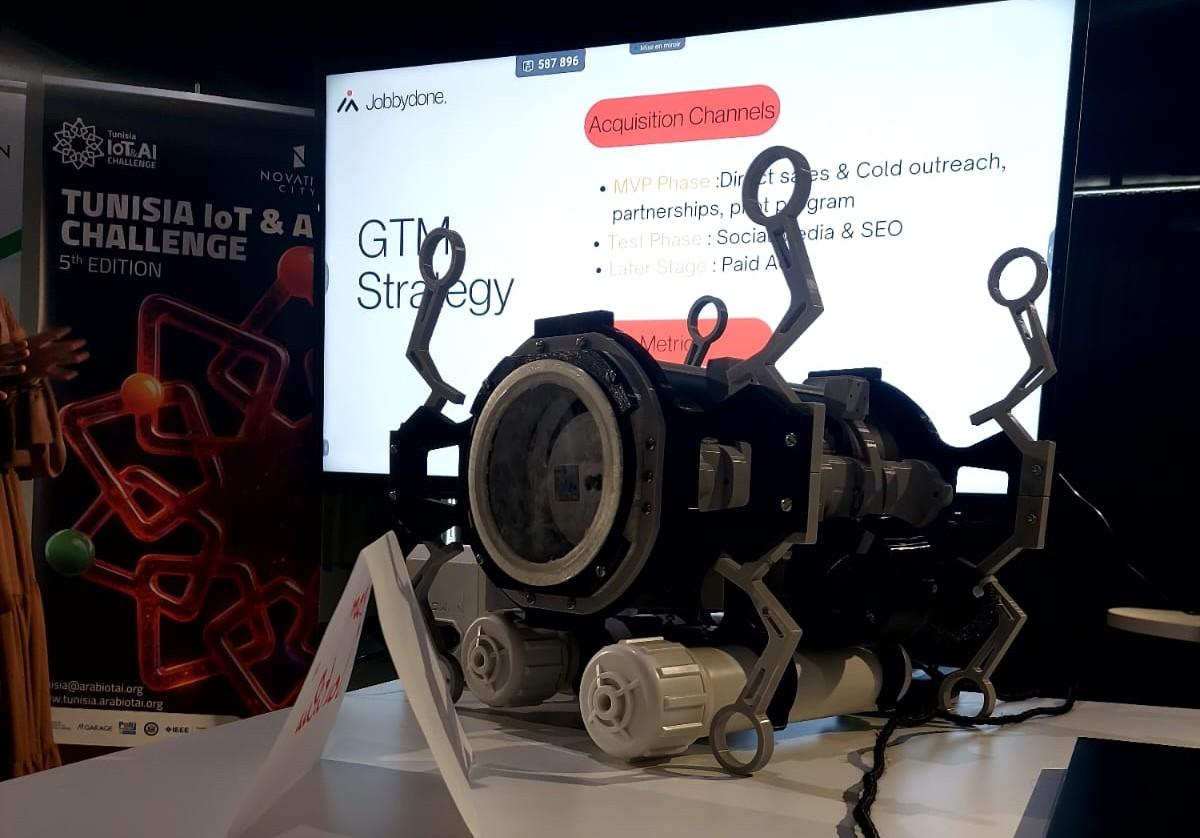
Not a concept.
Built.Tested.Iterated.
ProgramEight stages
Built bythe team.Sketch to water.
- 01ConceptMission definition, envelope and constraints
- 02Mechanical designFrame layout, buoyancy and center-of-mass budget
- 03Hull & structurePressure vessel, seals and modular mounting
- 04ElectronicsPower distribution, protection and propulsion chain
- 05Embedded systemsAcquisition, mission control and the real-time loop
- 06AssemblyIntegration, harnessing and leak-checking
- 07TestingBench, tank and open-water trials
- 08Autonomous missionFull profile flown with no operator in the loop
Technical architectureSix disciplines
The engineering behind the dive
A frame that survives pressure and still comes apart on a workbench.
- Watertight architecture with serviceable seals
- Modular structure — subsystems mount as blocks
- Buoyancy trimmed against a measured mass budget
- Center of gravity set below center of buoyancy for self-righting
- Variable ballast for depth authority
- Twin ducted propulsion on the longitudinal axis
One battery architecture feeding compute and propulsion without either browning out the other.
- On-board power distribution with isolated rails
- Sealed battery pods mounted low in the frame
- Protection against over-current and reverse polarity
- Conversion stages sized for peak thrust draw
- Brushless propulsion chain with electronic speed control
A Raspberry Pi that has to make the call before the surface ever hears about it.
- Raspberry Pi as the mission computer
- Continuous sensor acquisition over the on-board bus
- Pressure transducer for absolute depth
- Inertial measurement for attitude and heading
- Real-time mission control loop
Two loops, closed on-board, spending thrust on error.
- Sensor fusion into a single vehicle state
- Heading PID driving differential thrust
- Depth PID driving ballast and vertical authority
- Thrust allocation across the propulsion pair
The mission advances whether or not anyone is watching.
- Mission state machine with explicit phase transitions
- Autonomous decision making at each phase boundary
- Full profile execution with no permanent link
- Safe states on sensor loss or power margin
A report on surfacing, not a tether.
- Surface telemetry over long-range LoRa
- Buffered mission data flushed on link acquisition
- Monitoring of depth, heading, battery and status
- Command uplink for the next mission phase
Responsible engineeringUnited Nations SDGs
Engineeredwith purpose.
The vehicle exists to do one job without a crew: find microplastic concentrations, collect them, and come back with the record.
- 01Navigate
- 02Descend
- 03Detect
- 04Filter
- 05Return
- 06Transmit
No human intervention at any point in the cycle.
- 6Clean water and sanitationMonitoring what ends up in the water column
- 12Responsible consumption and productionTracing plastic waste back to its source
- 13Climate actionData from waters that are rarely surveyed
- 14Life below waterRecovering microplastics without disturbing habitat
The teamNautilus-X · Mk. I
Behindthe vehicle.
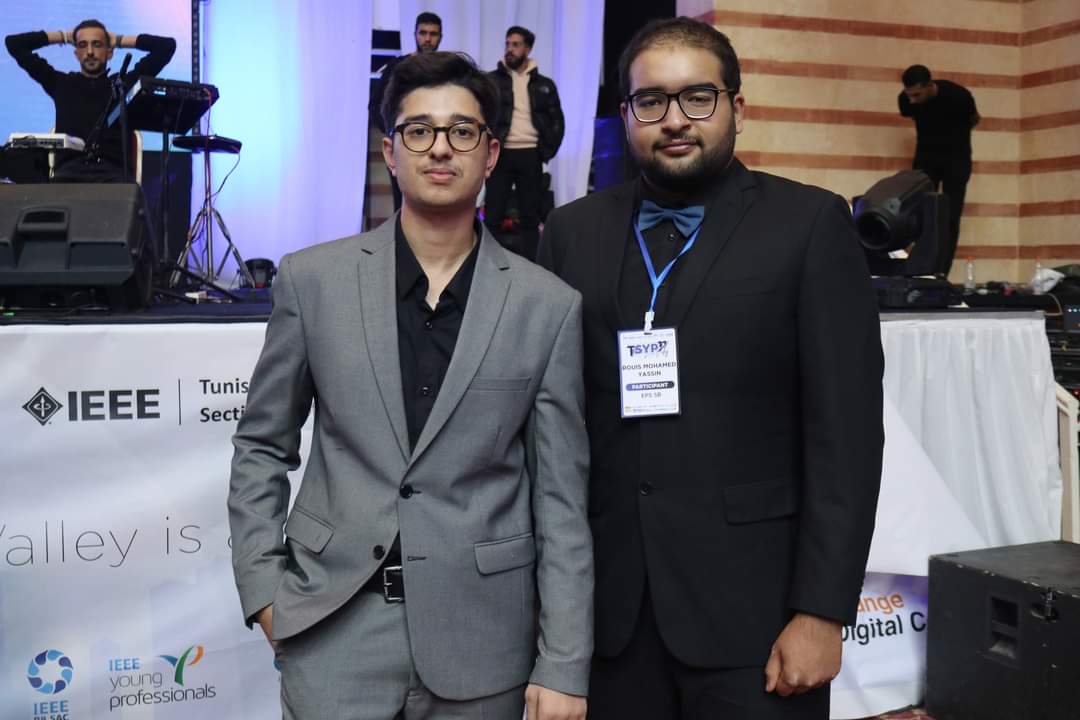
- Mohamed Mehdi Zmantar
- Mohamed-Yassin Rouis
Designed, machined, wired and programmed by hand — then put in the water and made to come back on its own.
It goes down,does the work,and comes back.
Nautilus-X is not a rendering of a submarine. It is a vehicle that was designed, machined, wired, programmed and put in the water — and that completes a full mission profile with nobody holding the controls.
- Tunisia IoT & AI Challenge
- 1st place
- GITEX Dubai regional final
- 2nd place
- Platform
- Modular AUV, Mk. I